How to Increase Cognitive Power?
Power isn’t just about your title, your authority, or even your expertise. One of the most overlooked but most influential forms of power is cognitive power: how powerful you feel in a given situation.
You can be in a senior leadership role and still feel powerless. At the same time, someone with no formal authority can feel confident, influential, and in control. That difference comes down to mindset.
Cognitive power shapes how you think, how you act, and how others respond to you. When you feel powerful, you gain the benefits of confidence, initiative, and influence. When you feel powerless, hesitation, self-doubt, and disengagement often follow.
Here are some practical, research-backed strategies to help you increase your cognitive power, regardless of your position in the organization.
What Is Cognitive Power?
Cognitive power refers to your internal sense of power—how you perceive your own influence, agency, and control in a situation.
It answers questions like:
-
Do I feel confident speaking up right now?
-
Do I feel capable of influencing this outcome?
-
Do I see myself as powerful or powerless in this moment?
Importantly, cognitive power does not always align with structural or personal power. Many leaders hold high-level positions but feel constrained by politics, bureaucracy, or self-doubt. Building cognitive power helps bridge that gap.
Strategy 1: Use Physical Posture to Prime Power
One of the most reliable ways researchers induce feelings of power is through body posture.
Open vs. Closed Body Postures
-
Closed posture: arms crossed, legs crossed, hunched shoulders, taking up little space
- Associated with low power and defensiveness
-
Open posture: shoulders back, chest open, arms relaxed or open, taking up space
- Associated with high power and confidence
Open body postures don’t just change how others see you—they change how you feel.
Why It Works
Research shows that open, high-power postures:
-
Increase testosterone (energy and confidence) by about 20%
-
Decrease cortisol (stress hormone) by about 25%
These physiological changes reinforce a powerful mindset that lasts beyond the posture itself.
How to Apply This
-
Use open posture before important meetings or presentations
-
Practice in private—your office or home works just fine
-
Make it a habit, not a performance
Your body can lead your mind into feeling powerful.
Strategy 2: Remind Yourself of the Power You Already Have
Another method researchers use to build cognitive power is feedback and reminders of positional authority.
Even if you don’t feel powerful, chances are you have more power than you realize.
Practical Ways to Reinforce Power
-
Reflect on your formal responsibilities and decision rights
-
Seek feedback that acknowledges your leadership role
-
Use visible cues (titles, roles, responsibilities) to remind yourself of your authority
These reminders help counteract organizational politics or internal doubt that can make even senior leaders feel powerless.
Strategy 3: Recall Past Experiences of Power
One of the most effective psychological tools for increasing cognitive power is memory recall.
Researchers often ask participants to:
-
Recall a moment when they had power over others
-
Describe the situation in detail
-
Focus on how they felt in that moment
Simply recalling these experiences triggers the same psychological and physiological effects as being powerful in the present.
How to Use This Strategy
-
Think about times when you successfully influenced others
-
Recall leadership moments, decisions, or achievements
-
Write them down or mentally revisit how confident and capable you felt
This works even when you currently lack formal authority. Your brain doesn’t distinguish much between past and present power when it comes to emotional activation.
Strategy 4: Challenge Limiting Beliefs and Stereotypes
Beliefs and stereotypes can quietly undermine cognitive power.
Common examples include assumptions about:
-
Gender
-
Age
-
Tenure
-
Appearance
-
Background or status
If you internalize these beliefs, they constrain how powerful you feel—even when they’re inaccurate or outdated.
Building Cognitive Power Requires:
-
Challenging your own limiting beliefs
-
Questioning stereotypes you see in others
-
Reframing assumptions about who “should” have power
Power is not determined by age, gender, or appearance—it’s shaped by competence, presence, and mindset. Actively challenging stereotypes allows you to reclaim cognitive power that might otherwise be suppressed.
Final Thoughts
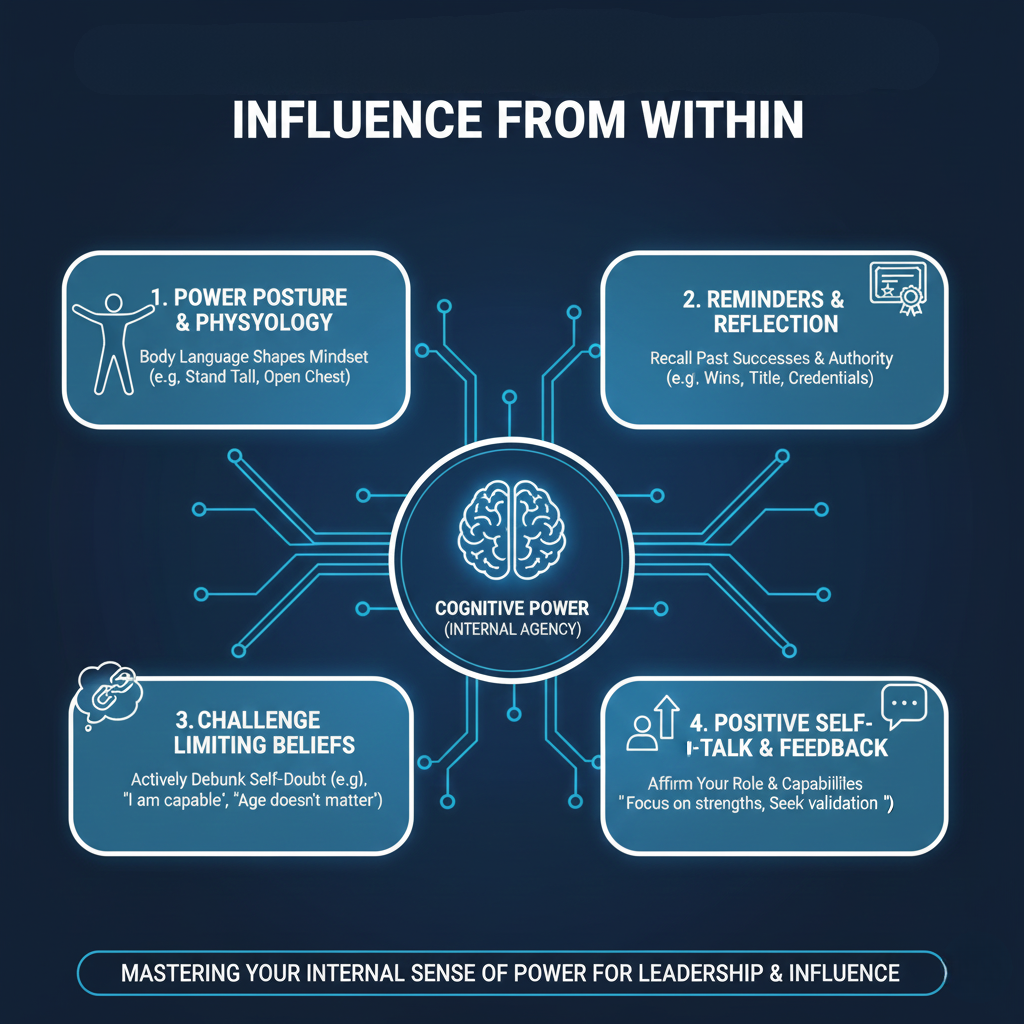
Cognitive power is not fixed. It can be developed intentionally through:
-
Body posture
-
Feedback and reminders
-
Memory and reflection
-
Challenging limiting beliefs
When you feel powerful, you act more decisively, communicate more confidently, and influence more effectively. The key is learning how to access that mindset—even in environments that make power feel scarce.
By strengthening your cognitive power, you unlock the benefits of power while remaining aware of its risks—and that balance is what truly effective leadership looks like.