How to Develop Personal Power?
Power in organizations is not limited to job titles or formal authority. Some of the most influential individuals succeed not because of where they sit in the hierarchy, but because of the personal power they’ve developed over time.
Personal power comes from who you are, what you know, and how others experience you. It allows you to influence people even when you don’t have direct authority over them—and often, it is more sustainable than structural power.
Here are four practical strategies for building personal power in any organizational setting.
Understanding Personal Power
Personal power is built on three core bases:
-
Expert Power – being recognized as knowledgeable and skilled in areas that matter
-
Information Power – having access to rare, valuable, or timely information others need
-
Referent Power – the personal attraction, trust, and charisma that make people want to follow you
Unlike structural power, personal power is not granted, it is earned and cultivated.
1. Build and Publicly Signal Your Expertise
Expertise only becomes power when others recognize it. The first step is identifying which areas of expertise matter most to your stakeholders, your team, your organization, and even external partners.
Steps to Strengthen Expert Power:
-
Identify critical skills or knowledge areas in your domain
-
Invest in learning and development to master them
-
Make your expertise visible and credible
Use Credentials, Symbols, and Artifacts
Credentials and symbols act as shortcuts for trust. Examples include:
-
Professional certifications and degrees
-
Business cards and email signatures listing credentials
-
Diplomas displayed in offices
-
Professional profiles (LinkedIn, websites)
-
Recognized industry badges or achievements
Doctors using “MD” after their name or lawyers displaying degrees in their offices are classic examples. These cues immediately signal competence and credibility.
The key is context. Cultural norms and organizational expectations vary, so choose symbols that resonate with the people you’re trying to influence.
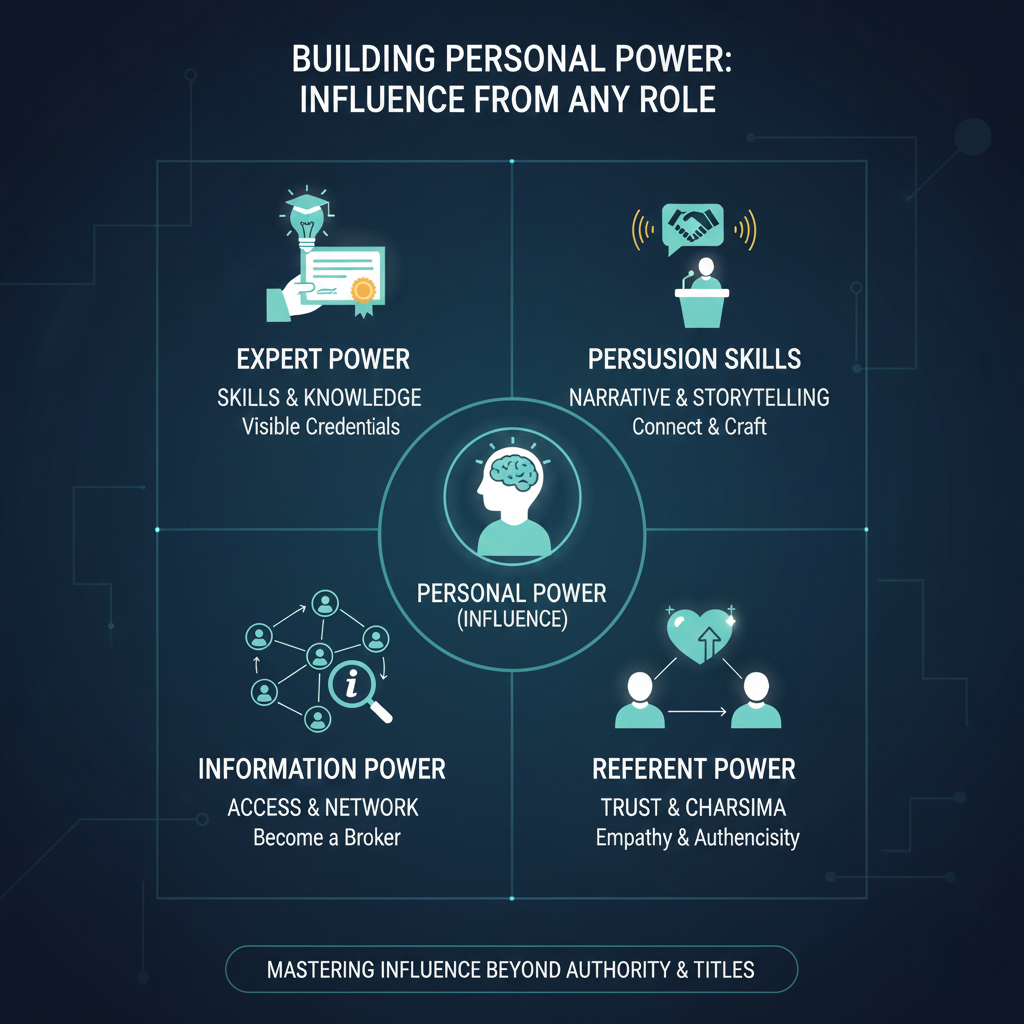
2. Develop Strong Persuasion Skills
Expertise and information only become influential when you can persuade others to act on them.
Persuasion is not about manipulation—it’s about communicating your ideas in a way that:
-
Makes sense to others
-
Connects emotionally
-
Feels relevant to their goals and concerns
Strengthen Your Persuasive Ability by:
-
Learning how to tell compelling stories
-
Structuring arguments clearly and logically
-
Adapting your message to different audiences
-
Timing and sequencing information strategically
Effective leaders don’t just present facts—they craft narratives that resonate. Persuasion turns knowledge into impact.
3. Become a Broker of Information
Information power grows when you are not just informed, but well-connected.
An information broker is someone who:
-
Has access to valuable, timely insights
-
Connects people who otherwise wouldn’t interact
-
Serves as a trusted hub within the organizational network
By occupying this position, others begin to rely on you—not just for information, but for access.
How to Build Information Power:
-
Build relationships across teams and departments
-
Stay informed about what’s happening beyond your immediate role
-
Share information thoughtfully and responsibly
-
Help others connect and collaborate through you
This role naturally increases your influence because it positions you at the center of decision-making and communication flows.
4. Cultivate Charisma and Referent Power
Referent power comes from how people feel about you. It’s the reason others want to follow, listen, and support you.
Contrary to popular belief, charisma is not innate. It can be learned and developed.
Charismatic Leaders Tend to:
-
Communicate with confidence and clarity
-
Show genuine interest in others
-
Demonstrate empathy and authenticity
-
Inspire trust through consistency and integrity
Small behavioral changes—such as better listening, positive body language, and emotional presence—can significantly increase how others perceive your charisma.
When people identify with you and trust you, influence becomes natural rather than forced.
Final Thoughts
To develop personal power:
-
Invest in expertise and valuable information
-
Make your knowledge visible and credible
-
Learn how to persuade and tell compelling stories
-
Position yourself as a connector and information broker
-
Actively develop charisma and relational influence
Personal power doesn’t depend on hierarchy. It grows through learning, relationships, and communication—and once built, it becomes one of the most reliable sources of influence in any organization.