How to Build Structural Power?
Power in organizations doesn’t come from a single source. It is built, reinforced, and maintained through multiple bases. One of the most important and often misunderstood forms is structural power.
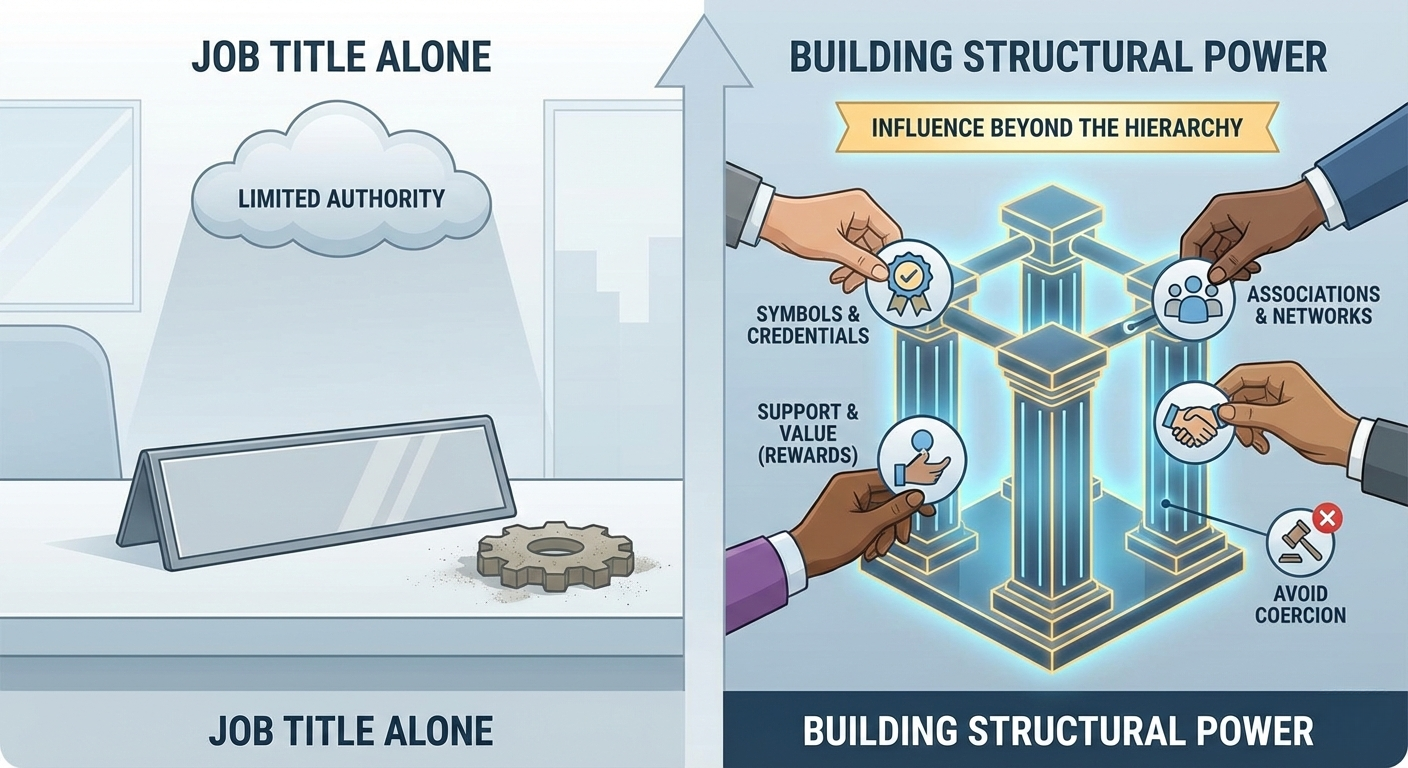
Structural power comes from your position in the organization and your ability to influence others through legitimate authority, rewards, and coercion. While promotion and hierarchy matter, structural power is not limited to job titles alone. Even individuals in the middle or lower levels of an organization can actively build and strengthen this form of power.
Here are some practical strategies you can use to build your structural base of power in a thoughtful and effective way.
Understanding Structural Power
Structural power is grounded in three classic bases:
-
Legitimate Power – authority that comes from formal roles, titles, and reporting relationships
-
Reward Power – the ability to provide valued outcomes
-
Coercive Power – the ability to impose negative consequences
While all three exist in organizations, the most effective leaders learn how to build legitimate and reward power strategically, while using coercion sparingly.
1. Strengthening Legitimate Power Beyond Job Titles
Legitimate power is often visualized through organizational charts. As people move up the hierarchy, they typically gain more formal authority. However, waiting for promotion is not the only way to increase legitimate power.
Use Symbols and Artifacts Strategically
Symbols and artifacts play a powerful role in communicating authority. They make your legitimate power visible and salient to others.
Common examples include:
-
Uniforms and insignia (e.g., military medals, police uniforms)
-
Professional credentials and certifications
-
Job titles and role descriptions
-
Business cards, email signatures, and profiles
These cues serve as constant reminders of your role and authority. For example, a title like Senior Software Engineer communicates more legitimate authority than Software Engineer, even if responsibilities overlap.
Make Authority Visible Without Overstating It
Effective use of symbols is subtle. Constantly reminding others “I’m the boss” often undermines authority rather than strengthens it. The goal is to signal legitimacy, not demand compliance.
What works will vary by organizational culture. In some environments, credentials matter most; in others, titles or formal processes carry more weight. Understanding your context is essential.
2. Leveraging Power by Association
Another effective strategy for building structural power is emphasizing your connections to higher-power individuals or positions.
This is a form of power by association. When others know that you are connected to senior leaders, influential stakeholders, or key decision-makers, your own perceived authority increases.
Important guidelines:
-
Use this strategy selectively
-
Avoid name-dropping or overemphasizing relationships
-
Let associations emerge naturally through collaboration and communication
When used appropriately, these connections can significantly enhance both your legitimate and reward power.
3. Expanding the Meaning of Reward Power
Many people underestimate their reward power because they focus only on money, bonuses, or formal evaluations. In reality, rewards extend far beyond compensation.
Non-Monetary Rewards That Matter
Three powerful forms of non-monetary rewards include:
-
Support – providing help, guidance, or protection when needed
-
Benefits – access to resources, flexibility, opportunities, or visibility
-
Favors – discretionary actions that make someone’s work or life easier
You don’t need formal authority to offer these rewards. You can provide them:
-
To peers
-
To subordinates
-
Even upward, to your manager or external stakeholders
This makes reward power one of the most accessible and versatile forms of structural power.
4. Using Coercive Power With Extreme Caution
Coercive power—forcing compliance through punishment or negative consequences—should generally be avoided as a primary strategy.
While there are rare situations where enforcement or discipline is necessary (such as missed commitments or performance failures), coercion carries high long-term costs:
-
Reduced trust
-
Lower engagement
-
Damaged relationships
Short-term gains often come at the expense of long-term effectiveness. As a result, coercion should be:
-
Used sparingly
-
Applied consistently and fairly
-
Framed as accountability, not control
In most cases, legitimate and reward power are far more effective and sustainable.
Final Thoughts
To build structural power effectively:
-
Reinforce legitimate power using symbols, artifacts, and titles—without overplaying authority
-
Leverage connections to higher-power individuals thoughtfully and selectively
-
Expand reward power beyond money to include support, benefits, and favors
-
Minimize reliance on coercion, using it only when absolutely necessary
Structural power is not something you simply inherit from a position, it is something you actively build through awareness, relationships, and behavior.
Mastering these strategies lays the foundation for stronger influence, better leadership, and more effective organizations.